
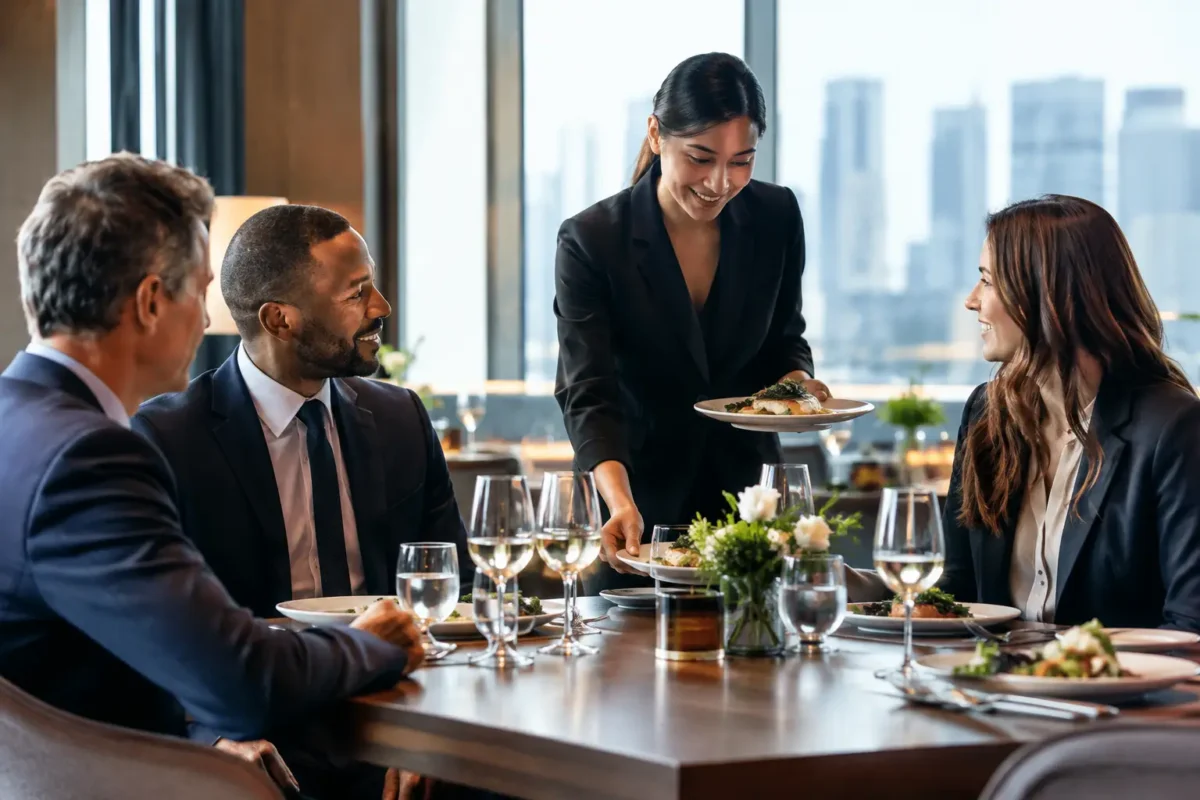
A senior client arrives 20 minutes early. One guest has changed their dietary requirements that afternoon, another needs a discreet departure before dessert, and the host is still in a meeting nearby. To manage executive dinner logistics well, every one of these details needs an owner before the first guest enters the restaurant.
Executive dinners may have a modest guest count, but the expectations are high. They are often designed to support a sensitive business conversation, recognise a strategic partnership or give regional leaders time together away from a formal conference setting. The experience must feel natural and unforced to guests, while the planning behind it remains precise.
Start with the business purpose, not the restaurant
The right venue depends on what the dinner needs to achieve. A private dining room that works well for a board-level discussion may feel too formal for a relationship-building dinner with prospective customers. Conversely, a lively restaurant can create energy for a team celebration but make it difficult to hold a confidential conversation.
Before approaching venues, establish the guest profile, desired atmosphere, level of privacy and hosting objective. Clarify whether the host wants structured remarks, a short presentation, product discussion or simply time for conversation. These choices shape the room layout, sound requirements, menu pacing and arrival plan.
For a Singapore-based programme or a regional gathering in Asia-Pacific, local context also matters. International guests may appreciate a venue that reflects the destination, but familiarity, accessibility and dietary confidence can take priority. A thoughtful choice balances sense of place with the practical needs of senior attendees.
Build a guest journey that respects executive time
Senior leaders are rarely able to commit to an evening without changes. Flight delays, extended meetings and last-minute diary adjustments are normal considerations, not exceptional ones. A workable dinner plan accounts for that reality without drawing attention to it.
Map the guest journey from invitation to departure. The invitation should communicate the essentials clearly: venue, date, arrival time, dress expectations if relevant, host contact and transport arrangements. Avoid overloading senior guests with operational detail, but ensure their executive assistants have what they need to coordinate attendance.
On the evening itself, the arrival experience deserves particular care. Confirm the correct entrance, parking or drop-off point, lift access and the name under which the booking is held. A well-briefed greeter can welcome guests, guide them to the private room and alert the host to key arrivals without creating a reception queue.
Departure requires equal attention. Confirm whether guests need cars, whether security teams have specific procedures and whether anyone must leave at a fixed time. When transport is arranged, build in a buffer and keep vehicle details with one designated coordinator. The aim is not to over-manage guests, but to remove avoidable friction.
Manage executive dinner logistics through one clear run sheet
A concise, detailed run sheet is the operational backbone of an executive dinner. It should be useful to the host, venue and event team, while keeping confidential information restricted to the people who need it.
The document should identify the final guest list, table plan, key contacts, dietary requirements, room timings, menu sequence, transport movements and responsibilities. It should also note important relationship details with discretion: for example, the guest of honour, the executive delivering remarks or any attendee who requires assistance with access.
The most effective run sheets distinguish between fixed moments and flexible ones. Guest arrivals, a timed address and vehicle departures may need firm coordination. Drinks reception duration and the start of the main course may need room to move if a key participant is delayed. Setting those decision points in advance helps the team respond calmly rather than improvising under pressure.
A pre-event briefing with the venue is particularly valuable. Confirm names and roles of the restaurant manager, banquet captain, kitchen lead and service staff assigned to the room. Review how staff should signal the event lead, when courses may be released and who has authority to approve changes. A polished dinner is usually the result of quiet, timely communication between people who know exactly what they are responsible for.
Treat food and beverage as part of the hosting strategy
Menus can support conversation or interrupt it. For executive dinners, food should be considered alongside timing, cultural expectations and the host’s objectives, not as a final administrative task.
A menu tasting or detailed consultation is useful when the dinner is high profile, features varied dietary needs or includes international guests unfamiliar with local ingredients. Where guests have allergies or religious dietary requirements, confirm the venue’s preparation and service protocol rather than relying only on menu labels. Privacy is important here too. Service staff should be briefed to handle requirements discreetly, without asking a guest to explain them at the table.
Pacing matters. Too many courses can make the evening feel prolonged, particularly after a full day of meetings. Too few can leave insufficient time for a meaningful discussion. If the host intends to speak, agree whether remarks will take place before dinner, between courses or over dessert. The venue should know to pause service and reduce background activity at that moment.
Alcohol service requires judgement. A considered drinks selection can be hospitable, but it should never become the focus of the occasion. Provide appealing non-alcoholic alternatives and ensure the service team understands the tone expected by the host. For some groups, a restrained approach is the most appropriate one.
Plan the room for conversation, confidentiality and comfort
A private room does not automatically guarantee privacy. Check sightlines from entrances, proximity to other diners, acoustics, external noise and the frequency of staff movement through the space. If sensitive matters may be discussed, ask the venue who will have access to the room and whether the booking can be identified discreetly.
Table shape influences the discussion. A single round table encourages inclusive conversation for a smaller group, while a long table can suit a formal hosted dinner if seating is carefully planned. Place the host where they can welcome arrivals and engage the guests who matter most. Consider personalities as well as seniority. A good seating plan encourages exchanges between people who would benefit from speaking with each other.
Keep table collateral purposeful. Name cards may be helpful for a larger group or where guests are meeting for the first time, but over-branded materials can make an intimate dinner feel like a formal function. If presentations are required, test the screen position, lighting and sound before guests arrive. Often, a short and well-timed message is more effective than a full presentation.
Build contingency plans without making the evening feel controlled
Good contingency planning protects the guest experience rather than making it more complicated. The event lead should have alternatives ready for common changes: a late VIP arrival, an unexpected plus-one, a dietary amendment, poor weather, an extended speech or a guest who needs to depart early.
There are trade-offs. Holding the first course for a delayed executive may be courteous, but it can disadvantage every other guest if the delay becomes lengthy. Starting without them may be preferable if the host can greet them personally on arrival. Agree a threshold with the host in advance so the team can act decisively.
For regional dinners, travel uncertainty deserves special attention. Monitor flight status where relevant, maintain direct contact with the executive assistant or local representative, and avoid a programme that depends on every attendee arriving at the same minute. A flexible reception period can absorb disruption while giving early arrivals a comfortable welcome.
Give the host room to host
The host should not be resolving restaurant questions, checking cars or tracking meal service. Their role is to make guests feel valued and guide the business conversation. The planning team’s role is to protect that space.
This means agreeing a communications approach before the event. One event lead should be the primary contact for the venue and support team, with a discreet method for alerting the host only when a decision genuinely requires their input. For a dinner involving senior regional stakeholders, a tailored service team can also coordinate across executive assistants, security contacts, transport providers and venue personnel without creating competing instructions.
At iCube Events, this detail-led approach is central to how we support corporate hospitality programmes: listening closely to the objective, assigning the right resources and staying attentive to the small changes that shape a guest’s impression.
The best executive dinners do not feel heavily produced. Guests remember that the conversation was easy, the setting felt right and the host had their full attention. That impression comes from careful preparation, trusted partners and a team ready to make every practical detail disappear into the background.