
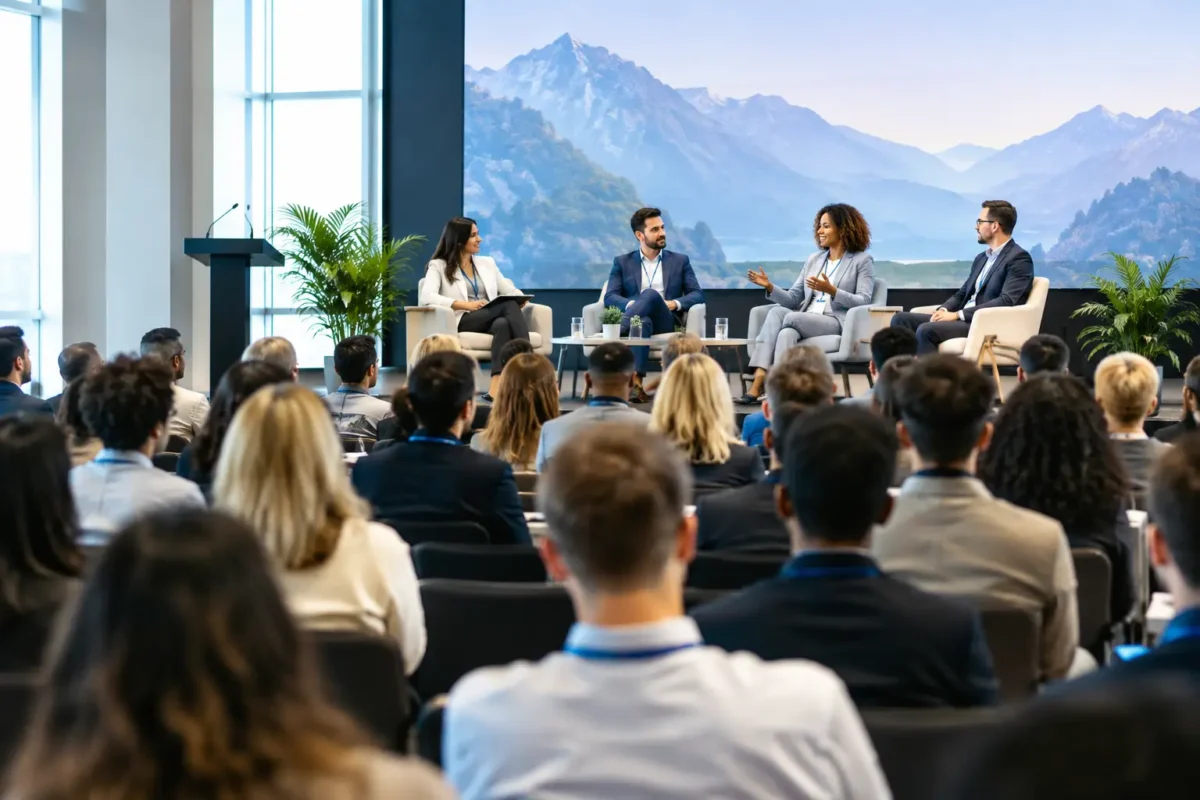
A multi-day summit has to earn every overnight stay. The strongest multi-day summit examples do not simply extend a one-day conference with more presentations. They use time deliberately: to align regional teams, give senior leaders space for meaningful conversations, help customers understand a strategic direction, and turn shared learning into practical next steps.
For corporate event owners, the challenge is balancing ambition with attendee energy, travel requirements, competing stakeholder expectations and a schedule that still feels purposeful on day three. The format should follow the business objective, not the other way round. Below are seven approaches that work particularly well for organisations bringing together audiences across Singapore and the wider Asia-Pacific region.
1. The regional leadership alignment summit
A regional leadership summit is designed to bring country heads, functional leaders and high-potential managers into one room before a major planning cycle, transformation programme or market shift. It is often most effective at two or three days, particularly when attendees have travelled from several markets.
Day one can focus on the strategic picture: business performance, market context and leadership priorities. Day two should move from broad direction to smaller working sessions, where leaders test assumptions, identify dependencies and agree on what requires local adaptation. A final half-day gives executive sponsors an opportunity to confirm commitments and explain what happens next.
The trade-off is that leadership audiences have little patience for content that could have been circulated in advance. Pre-event briefings, concise executive materials and a tightly facilitated agenda are essential. The summit itself should be reserved for discussion, decisions and relationship-building.
2. The international sales kick-off
Sales kick-offs are among the most familiar multi-day summit examples, but they can lose impact when every agenda item competes for the main stage. A better approach is to organise the programme around the moments that sales teams need to perform well: clarity on priorities, confidence in new offers, practical capability-building and recognition.
A three-day format may begin with the commercial direction and market outlook, followed by product or solution training and customer scenarios. The middle of the programme is usually best used for role-based breakouts, peer learning and conversations with marketing, technical and customer-success teams. Recognition works well when it is woven throughout the programme, rather than held solely for a final dinner.
For a regional audience, content must also account for market maturity and local selling conditions. A message that resonates in Singapore may need a different example or enablement tool for colleagues in Indonesia, Vietnam or Japan. Consistent objectives do not require identical sessions.
3. The customer and partner summit
A customer and partner summit should leave delegates with more than a polished event experience. It should give them a clearer view of where the organisation is heading and why that direction is relevant to their own priorities.
This format often works over two days. The first can establish the strategic narrative through leadership perspectives, industry discussion and customer stories. The second can become more specialised, with agenda tracks by sector, role or solution interest. Roundtables and hosted meetings are particularly valuable because they turn a large audience into purposeful conversations.
The key decision is how much content should be promotional. Too much product detail can weaken the perceived value of a senior-level summit. A stronger programme leads with business challenges, credible peer voices and practical insight, then makes space for tailored conversations where appropriate. Hospitality should support those conversations, whether that means a carefully planned welcome evening, hosted dining or a partner networking format with clear purpose.
4. The life-sciences advisory and education summit
For organisations in life sciences, an advisory and education summit must be designed around the needs of a highly informed audience. Delegates may include medical experts, researchers, internal commercial teams or patient advocacy stakeholders, each with different expectations of the programme.
A multi-day structure gives organisers room to separate education, discussion and planning. A first day might include scientific updates and external expert perspectives, followed by smaller advisory sessions that allow participants to contribute their experience. A second day can focus on conclusions, future evidence needs or internal team alignment, depending on the audience and the relevant governance requirements.
Here, precision matters as much as presentation. Speaker management, delegate communication, privacy considerations, room layouts and documented approval processes all need early attention. It is also worth protecting time between sessions. Experts are more likely to contribute openly when the programme does not rush them from one formal item to the next.
5. The innovation and transformation summit
An innovation summit is often requested when an organisation wants to signal change. Yet an impressive stage alone will not create useful outcomes. The event needs a clear question: are teams being asked to identify new opportunities, solve a defined business issue, adopt a new operating model, or build confidence around a major change?
The best programmes move between inspiration and application. Senior leaders can set the context on day one, followed by demonstrations, customer insight and selected external viewpoints. Day two should be practical, using facilitated workshops where cross-functional groups work on prioritised challenges. If the summit runs for three days, the final day can be used for prototype presentations, leadership feedback and ownership of the next actions.
This format benefits from thoughtful event design. Different room settings can signal different modes of work, from theatre-style briefings to workshop tables and quieter spaces for one-to-one conversations. However, creative elements should make the objective easier to understand, not become a distraction from it.
6. The regional conference tour
Sometimes a single destination is not the right answer. A regional conference tour takes a core message to several markets, adapting the programme to local audiences while maintaining a consistent central narrative. It can be particularly effective for enterprise technology, telecommunications and trade-focused organisations with teams, customers or partners spread across Asia-Pacific.
Rather than repeating a full conference unchanged, the organiser should identify what must remain fixed and what can flex. Brand identity, strategic messages, keynote materials and measurement criteria may be consistent. Local customer speakers, language needs, programme length, venue style and hospitality can be adapted to the market.
Operational discipline makes the difference. Speaker movements, freight or local production requirements, venue lead times and stakeholder approvals multiply quickly across destinations. A detailed master plan, supported by market-specific run sheets and clear decision owners, keeps the experience consistent without ignoring local realities.
7. The executive strategy retreat
An executive strategy retreat is smaller in scale but often carries significant importance. It is suited to boards, senior leadership teams or business-unit leaders who need the time and setting to work through complex choices away from daily operational pressure.
The atmosphere should feel considered, not overproduced. A well-chosen venue, discreet hospitality and a manageable agenda all contribute to better discussion. The programme may include an opening perspective, a review of key decisions, facilitated working blocks and informal meals that allow conversations to continue naturally.
Retreats can fail when they become either too relaxed or too densely scheduled. Senior participants need enough structure to make progress, alongside sufficient space to reflect and challenge one another. Confidentiality, arrival experience and support for individual requirements are also central to the overall standard of care.
What these multi-day summit examples have in common
Across these formats, the most reliable programmes share a few planning principles. First, each day has a distinct job to do. Delegates should be able to explain why they are still needed in the room on the second or third day.
Second, attendee journeys are planned as carefully as content. This includes pre-event communication, travel and accommodation coordination, registration, transitions between sessions, dietary requirements and post-event follow-up. A minor gap in any one of these areas can affect the perceived quality of the whole experience.
Third, the delivery team needs a shared view of success. For some summits, this is audience engagement and message recall. For others, it may be partner meetings completed, action plans agreed, qualified opportunities created or feedback from key stakeholders. Setting these measures early helps shape the agenda and prevents last-minute additions from diluting its purpose.
For organisations managing a regional programme, an experienced event partner can bring useful perspective to the choices behind the plan: whether to centralise or localise, which moments merit greater investment, and how to protect the experience when timelines or budgets change. At iCube Events, that conversation starts with the business outcome and the people who need to leave the summit ready to act.
The right summit format is not necessarily the largest or most elaborate. It is the one that gives the right people enough time, context and confidence to make the next decision count.