
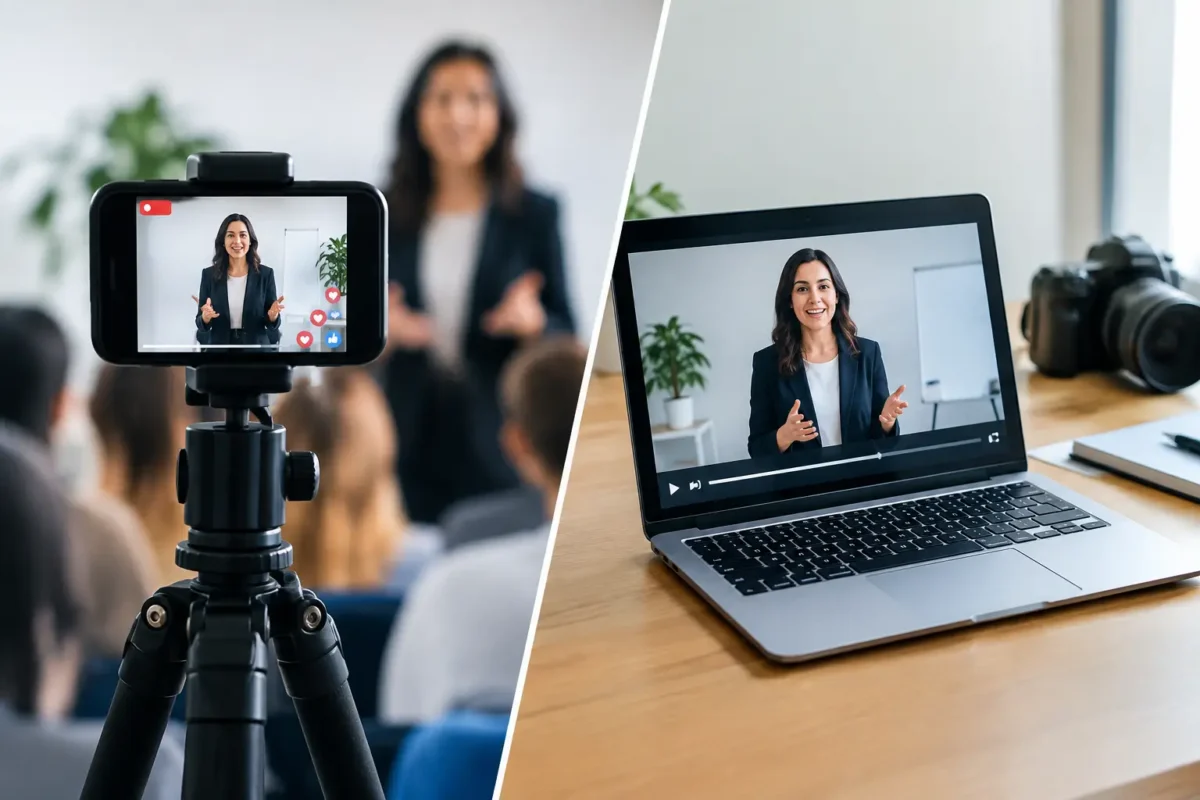
A regional sales meeting may have senior leaders in Singapore, product teams in Tokyo and customers joining from several time zones. The question is not simply whether they can watch. It is whether they need to participate at the same moment, or whether the content will serve the business better after the room has cleared. That is the real distinction in live streaming versus event recording.
For corporate events, the right choice affects the attendee experience, production approach, speaker preparation, risk management and the useful life of your event content. A live stream can create momentum and shared focus. A recording can extend access, support follow-up and preserve valuable presentations. Often, the most effective answer is a considered combination of both.
Live streaming versus event recording: the core difference
Live streaming broadcasts an event in real time to an online audience. It is designed around immediacy. Remote attendees can watch a keynote as it happens, respond to polls, submit questions and, where the format allows, join discussion with people in the venue.
Event recording captures sessions for viewing later. It may be as focused as recording a CEO address, or as extensive as filming a multi-day conference programme with individual session edits. Its strength is flexibility: audiences can watch when convenient, revisit complex material and share approved content with colleagues who were unable to attend.
The distinction matters because the two formats serve different business objectives. Streaming is about collective attention and active participation. Recording is about reach over time, knowledge retention and content reuse. Treating a recording as an afterthought to a live stream can leave remote viewers with a poor experience and limit the value of material that took significant effort to create.
Choose live streaming when timing and participation matter
Live streaming is particularly suited to moments where being present is part of the message. Leadership town halls, annual kick-offs, product announcements, awards presentations and investor or partner briefings can benefit from a defined live window. When hundreds of colleagues hear the same message together, it supports alignment and gives leaders a chance to set the tone directly.
It also works well when remote participation needs to influence the event. A moderated Q&A, live polling or a discussion that brings in virtual panellists can make distant audiences feel included rather than merely accommodated. For a regional organisation, this may allow teams across Asia-Pacific to join a key moment without requiring every participant to travel.
That value comes with higher operational stakes. A live broadcast needs a reliable run sheet, experienced show calling, clear speaker cues, adequate internet redundancy and a realistic plan for audience interaction. Camera positions, stage lighting and presentation formats must be considered for both the room and the screen. A speaker who connects easily with a ballroom audience may need support to acknowledge viewers joining remotely.
Live formats also demand decisive governance. Someone must be authorised to approve on-screen slides, audience questions, holding messages and contingency responses. For senior leadership communications or regulated industries, the review process should be settled well before event day. The production team cannot pause a live moment to resolve uncertainty about a chart, claim or participant comment.
Choose event recording when long-term access matters
Event recording is often the better choice when the audience is spread across multiple markets, schedules are difficult to align or content is detailed enough to merit repeat viewing. Training sessions, technical demonstrations, specialist panels and conference breakouts gain value when attendees can pause, replay and return to specific points.
For an association conference or industry event, recordings can also help maintain engagement after the programme. Attendees may have had to choose between concurrent sessions. Providing approved session footage gives them a route to content they missed and can make the overall experience feel more complete.
Recording gives organisers greater editorial control. A session can be trimmed, captioned, divided into chapters or released only after speakers and stakeholders have reviewed it. This is useful where presenters need to refine a message, where slides contain confidential information, or where a discussion includes material that should not be distributed beyond a defined audience.
However, recorded content still needs a production standard worthy of your brand. Poor audio, obstructed sightlines and slides that cannot be read on screen make content difficult to use, regardless of how strong the speaker may be. Planning should cover camera coverage, microphones, presentation capture, permissions, file management and the intended final formats from the outset.
The questions that shape the right format
The most useful decision starts with the event objective rather than the technology. If the priority is to create urgency, gather questions and make people feel part of a shared occasion, live streaming is likely to have a central role. If the priority is to distribute expertise across markets and build a useful content library, recording may deliver stronger returns.
Audience behaviour is equally important. Consider where viewers are based, whether they can attend during the chosen time, how long they can stay engaged and what device they will use. A 90-minute leadership session may work live for teams in similar time zones, while a technical session for regional audiences may be more valuable as an on-demand resource.
The nature of the content also matters. Announcements with a fixed embargo, recognition moments and live conversations benefit from real-time delivery. Detailed education, demonstrations and sessions with several concurrent tracks are naturally suited to recording. Sensitive content may call for restricted access, delayed release or no recording at all.
Finally, assess the practical environment honestly. A hotel ballroom, exhibition floor or overseas venue may have different connectivity, acoustic and power considerations. Venue checks should establish not just whether an internet connection exists, but whether it can support the planned broadcast reliably alongside attendee use and event operations. The right format is one your team can deliver confidently, not merely one that looks appealing on a programme outline.
A combined approach can serve both audiences
For many corporate programmes, live streaming and recording are complementary rather than competing choices. A flagship keynote can be streamed live to unite teams, then made available on demand for employees who could not join. Selected breakouts can be recorded for later viewing, while more confidential workshops remain in-room only.
This approach needs clear boundaries. Decide in advance which sessions are live, recorded, both or neither. Communicate those choices to speakers, moderators and attendees. If virtual questions will be included, assign a moderator to curate them and give the on-stage host a clear method for bringing them into the conversation.
A combined model also benefits from an editorial plan. Identify the sessions that deserve individual edits, the messages that can be turned into short internal clips and the content that should expire after a set period. This helps avoid creating hours of footage that no one can find or use.
Plan production around the attendee experience
The strongest event productions begin with the experience you want each audience to have. In-room delegates should not feel that cameras are distracting from the programme. Virtual attendees should not feel like they are watching through the back of a ballroom. Both groups need clear audio, readable visuals and a sense that the event has been designed with them in mind.
For live streams, build rehearsal time into the programme. Test speaker walk-ons, videos, slide transitions, remote contributors and Q&A workflows. Have a contingency plan for a delayed speaker, a lost connection or a presentation change. Good preparation protects the confidence of speakers and gives organisers room to respond calmly when circumstances shift.
For recordings, confirm consent and distribution expectations before cameras are in place. Speakers, panellists and audience members may have legitimate concerns about how their likeness, comments or intellectual property will be used. Clear notices, agreed release processes and appropriate access controls help protect everyone involved.
At iCube Events, event planning is approached as a shared process: aligning production decisions with the business purpose, the audience profile and the practical realities of the venue. Whether a programme is a focused workshop or a regional conference with audiences joining across borders, careful coordination turns digital access into a credible extension of the event experience.
The best choice is not the format with the most features. It is the one that gives the right people access to the right message, in a way that reflects the standard and care behind your event.