
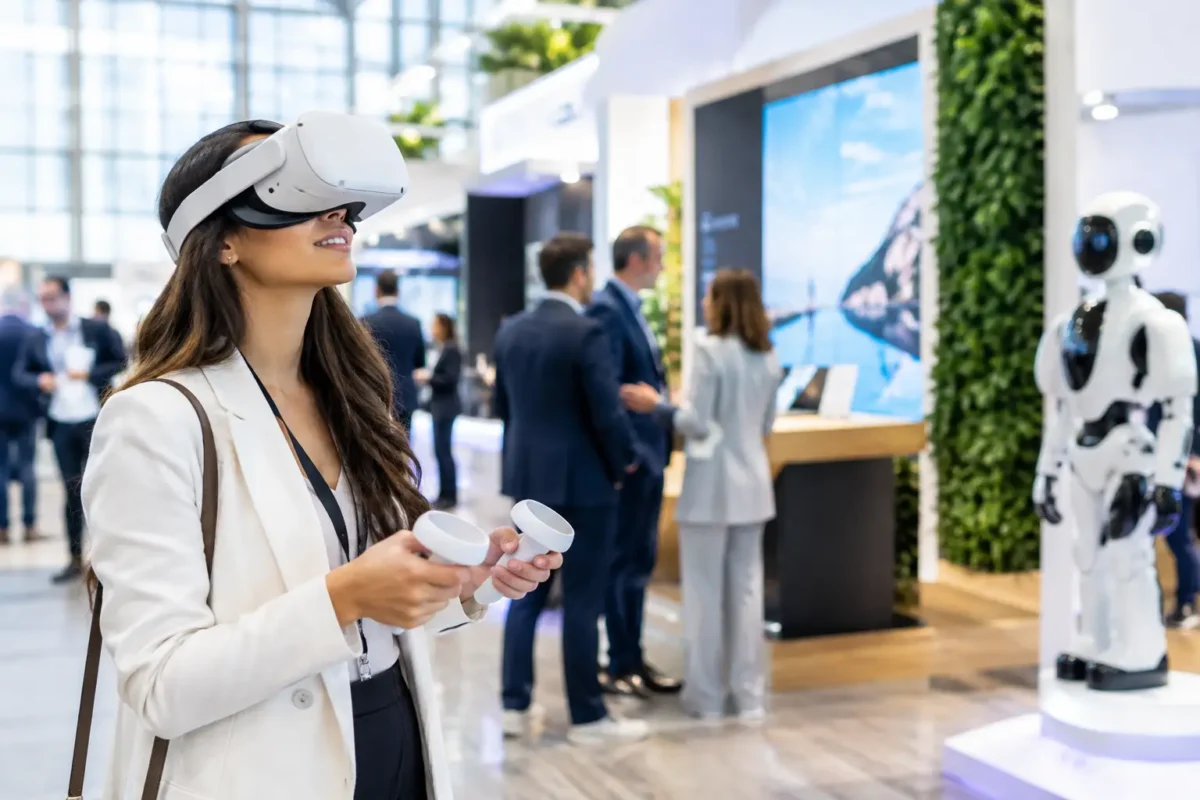
A busy exhibition floor can look successful while delivering very little business value. Stands are occupied, screens are active and visitor numbers appear healthy, yet sales teams leave with poorly qualified contacts and attendees struggle to explain what they gained. The exhibition trends shaping 2026 respond to this gap. Corporate exhibitors are placing greater value on relevance, useful conversations and disciplined follow-through rather than spectacle for its own sake.
For organisations exhibiting in Singapore or across Asia-Pacific, the standard is rising. Audiences have limited time, senior stakeholders expect a polished brand experience, and regional programmes must work across varied markets, venues and operational conditions. The strongest exhibition plans now connect the physical environment to a clear commercial purpose, then give teams the structure to deliver it consistently.
Exhibition trends: from footfall to meaningful engagement
Footfall still matters, particularly for major trade shows where visibility supports market presence. But it is no longer a sufficient measure of success. An exhibition stand should help a visitor make a decision: whether to learn more, arrange a demonstration, meet an expert, begin a partnership conversation or return with colleagues.
This has changed the way stands are planned. Rather than building around a large central display, many teams are creating distinct areas for discovery, discussion and demonstration. A concise visual message draws people in; knowledgeable staff and relevant content give them a reason to stay. The layout needs to account for practical details too, including queue management, private meeting space, storage, power requirements and sightlines from key aisles.
The right balance depends on the objective. A product launch may require theatre and scheduled moments that gather a crowd. A life-sciences or enterprise technology exhibition may benefit more from quieter, consultative spaces where specialists can have credible conversations. The format should follow the audience and commercial goal, not simply the latest stand design fashion.
Content is becoming part of the stand itself
Exhibition content is moving beyond looping corporate videos. Visitors increasingly expect concise, useful information that responds to their role and stage of consideration. This might include a short expert session, a live use case, an interactive comparison tool or a scheduled consultation with a subject-matter specialist.
The most effective content is designed for the exhibition setting. It has to be understood amid noise, movement and competing demands on attention. A presentation that works in a boardroom may be too detailed for the show floor, while a visually impressive installation without a clear message may attract interest but not generate quality conversations.
Planning should also consider what happens after the interaction. A session can prompt visitors to book a meeting, request material tailored to their sector or attend a related customer event. In this way, content becomes a practical bridge between brand awareness and pipeline development.
Smarter use of data, without losing the human touch
Lead-capture tools, appointment platforms and event apps can provide valuable signals, but technology should support the conversation rather than interrupt it. Scanning every badge without understanding visitor intent can leave teams with a large database and little clarity about priority follow-up.
A better approach is to agree a simple lead-qualification framework before the event. Sales and marketing teams should define what information matters, such as business need, buying timeframe, market, role and next action. Staff then need brief training on how to capture those details naturally and record them consistently.
Data is particularly valuable when it informs decisions during the show. If scheduled demonstrations are filling up while a static display receives little attention, the team can adjust staffing, messaging or signposting. Where consent and local data requirements are properly managed, post-event reporting can show not only volume but the source of qualified opportunities, meeting attendance and conversion through the next stage of engagement.
There is a trade-off. Overly complicated data collection creates friction for visitors and slows busy teams. For many corporate exhibitions, a few reliably captured fields and clear ownership of follow-up are more useful than a long form completed inconsistently.
Smaller, better meetings alongside the main show
Large exhibitions remain important convening points, but high-value outcomes often happen in the spaces around them. Hosted customer meetings, partner briefings, executive roundtables and private dinners allow organisations to continue conversations away from the noise of the exhibition hall.
This is especially relevant for regional teams bringing customers or leaders to Singapore for a major industry event. A well-timed hospitality programme can turn a one-day visit into a more considered relationship-building opportunity. It also gives senior representatives a setting in which to hear market feedback directly.
These moments need the same care as the stand. Guest lists, dietary needs, transport, venue access, hosting roles and contingency plans shape the experience. The purpose should remain clear: a private event that feels disconnected from the exhibition message can appear like an afterthought, however well produced it may be.
Sustainable choices are becoming operational choices
Sustainability is no longer only a statement in an event brief. Clients, attendees and venues are asking more practical questions about material use, transport, waste, energy and reuse. For exhibition teams, the most credible response is often thoughtful design discipline rather than an extensive list of claims.
Modular stand elements can be reconfigured for future programmes. Durable signage systems can reduce one-off printing. Local sourcing, consolidated freight and accurate production quantities can help limit unnecessary movement and waste. Digital materials may be appropriate for some audiences, although printed collateral still has a role where it supports a technical discussion or gives visitors a useful reference after the event.
There are limits to every choice. Reusable structures require storage, careful maintenance and enough future use to justify the investment. Digital alternatives depend on reliable connectivity and attendee preference. A realistic sustainability plan identifies the largest areas of impact, documents what is feasible and avoids promising more than the event can deliver.
Flexible exhibition design for changing conditions
Across Asia-Pacific, exhibitions can involve complex transport schedules, differing venue rules, multiple suppliers and teams arriving from several countries. Flexibility has become a design principle, not merely a contingency measure.
This includes preparing alternate specifications for space changes, creating display systems that can adapt to varying floorplans, and confirming lead times for graphics, customs documentation and technical equipment early. It also means having a practical escalation route when an issue emerges on site. A replacement panel, delayed shipment or last-minute speaker change needs calm coordination, not improvised decision-making in front of stakeholders.
Consistency remains important, particularly for organisations taking a campaign across regional markets. Yet consistency does not mean copying every detail. Messaging, language, guest hospitality and product emphasis may need to reflect the local audience while protecting the core brand identity. The strongest regional programmes establish clear non-negotiables, then allow sensible local adaptation.
The exhibition team is part of the visitor experience
No stand design can compensate for an unprepared team. Visitors often judge the organisation through the first person who welcomes them, whether that person is a sales representative, technical expert or event host. Staff need to understand the central message, know where to direct different enquiries and feel comfortable opening a conversation without relying on a script.
A short briefing should cover more than logistics. It should clarify the audience profile, priority accounts, daily schedule, lead process, dress expectations and how to handle difficult questions or media enquiries. Team leaders should also plan breaks and rotation. People who have been standing for hours are less attentive, and the busiest times on the floor are rarely the best moments to discover gaps in coverage.
For complex shows, an experienced event partner can bring together venue coordination, stand build, hospitality, registration, logistics and on-site management under one working plan. iCube Events approaches this work as an extension of the client team, with the aim of giving internal stakeholders the confidence to focus on customers, speakers and business outcomes.
Building an exhibition plan that can prove its value
The most useful measurement begins before a stand is designed. Set a small number of outcomes that connect to the reason for exhibiting: qualified meetings, target-account engagement, product demonstrations, partner conversations, media appointments or a defined pipeline contribution. Then determine how each outcome will be recorded and who will act on it.
This avoids a familiar problem: post-event reporting that counts activity but cannot explain its value. Visitor scans, social reach and giveaway numbers can provide context, but they should not displace indicators that matter to the commercial team. A debrief held shortly after the event can capture operational learning while details are fresh, from stand traffic patterns to supplier performance and visitor questions that should influence future messaging.
The most memorable exhibitions are rarely the ones with the most technology or the largest footprint. They are the ones where every interaction feels considered, the team knows what it is there to achieve, and the follow-up reflects the same care visitors experienced on the floor.