
A regional conference can look straightforward on a programme grid: keynote, breakouts, lunch, networking and a closing reception. The logistical reality is far more exacting. This conference logistics case study examines a representative three-day Singapore programme for 600 corporate delegates, including overseas speakers, parallel learning tracks and senior stakeholder hospitality.
The purpose is not to suggest that every event needs the same operating model. A 60-person leadership meeting and a 1,000-person conference require different resources. It is to show how thoughtful planning connects business objectives to the hundreds of practical decisions that shape an attendee’s experience.
The brief: one event, several audiences
The event owner needed to bring sales leaders, technical specialists, partners and customers together around a new regional business direction. The agenda had to feel consistent across the main conference, product demonstrations, sponsor areas and an invitation-only executive dinner. Delegates were arriving from Singapore and across Asia-Pacific, with different flight times, dietary requirements and familiarity with the venue.
The central challenge was coordination. The programme involved a conference venue, multiple function rooms, hotel allocations for selected guests, airport transfer arrangements, speaker management, registration technology, event collateral and an evening function at a separate location. Each workstream was manageable on its own. The risk emerged where they met: a delayed flight affecting rehearsal, a room change affecting signage, or a dietary update arriving after catering numbers were confirmed.
At the outset, the planning team agreed success measures with the client. Delegates needed clear information before travelling, registration had to move quickly during the morning peak, sessions had to begin on time, and VIP guests needed discreet, well-informed support. Just as importantly, internal stakeholders needed one reliable point of contact and visibility over decisions as the programme developed.
Building the logistics plan around decisions
A useful logistics plan is not simply a checklist of suppliers. It clarifies who makes decisions, what must be approved, and when a late change begins to affect cost, quality or attendee communication. For this programme, the event team established a working schedule that linked the agenda, floor plans, technical requirements, guest data and transport movements.
Early venue walk-throughs were used to test the attendee journey rather than merely inspect rooms. The team traced the route from drop-off point to registration, assessed where queues could form, checked access between plenary and breakout spaces, and identified where wayfinding would be most valuable. This affected the registration layout, signage locations and staffing positions.
The same approach shaped the speaker experience. International presenters received a concise briefing covering airport arrival information, hotel arrangements, rehearsal times, presentation deadlines and an on-site contact. Presentations were collected and checked in advance, then loaded and tested during technical rehearsals. A speaker ready room gave presenters a quiet place to prepare while allowing the production team to resolve final changes without disrupting the main programme.
There is a trade-off in every timetable. Allowing additional transition time can make an agenda feel less dense, but it protects the sessions that follow and gives delegates room to move between spaces. Here, the team recommended slightly longer changeovers between parallel tracks. It reduced pressure on lifts, eased congestion at refreshment points and improved the likelihood of on-time starts.
One source of operational truth
The event control document brought together the details that teams most often need under pressure: contacts, programme timings, room setups, speaker movements, transport schedules, catering service times, escalation routes and contingencies. It was maintained as a live document, with changes logged and shared through agreed channels.
This mattered because version control is a quiet but significant part of conference delivery. If the registration team works from an old guest list, or the venue receives an outdated room plan, even a small discrepancy can be visible to attendees. Clear ownership and disciplined updates help prevent that drift.
Registration, hospitality and attendee confidence
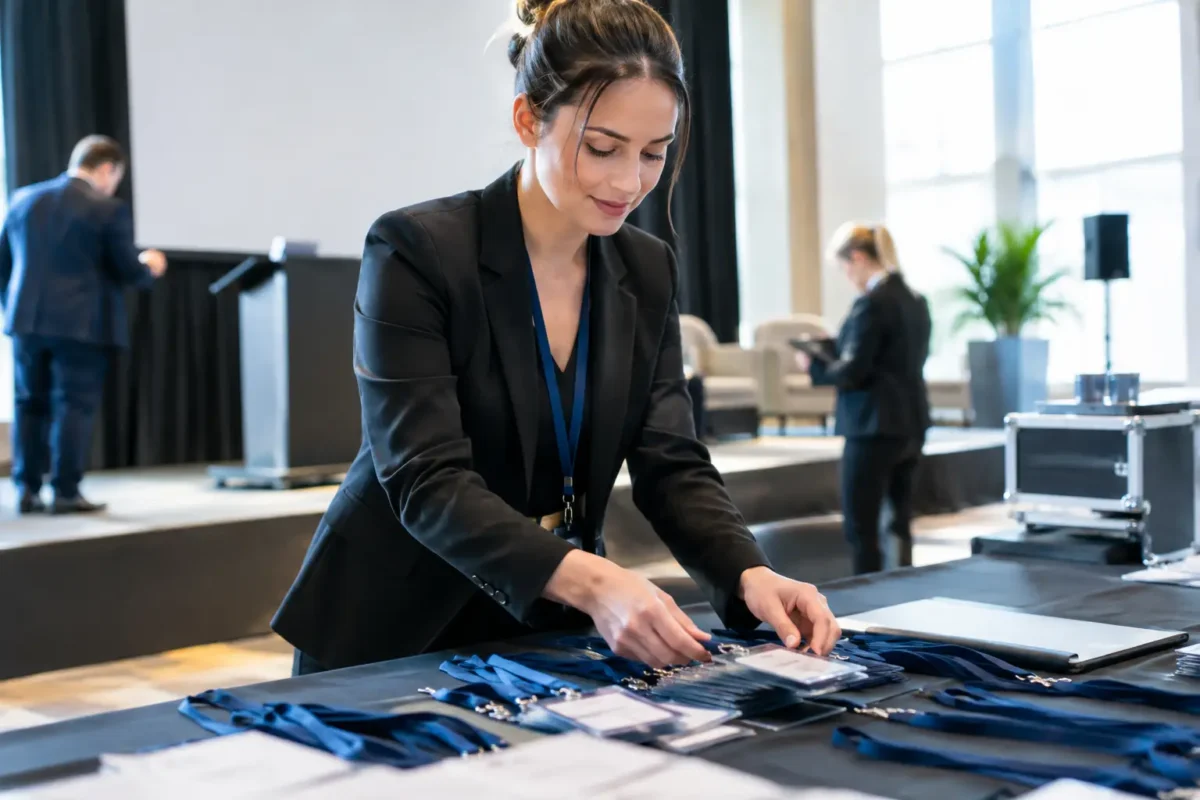
For many delegates, registration is their first real impression of the conference. The arrival plan therefore separated pre-registered delegates, walk-ins, VIPs and speakers without making the process feel overly segmented. Staff were briefed not only on badge collection but also on the agenda, room locations, accessibility arrangements and the appropriate escalation path for more complex requests.
Guest data was reviewed before the event to identify dietary needs, mobility requirements, seniority and hosted guests. This allowed the hospitality team to prepare for individual requirements in a professional, unobtrusive way. For the executive dinner, seating plans and host briefs were checked against late confirmations to avoid placing a strategic guest at a table with an unsuitable mix of attendees.
Communication was deliberately practical. Pre-event messages set out arrival windows, venue access, dress guidance, local transport information and a clear contact route for support. On site, concise signage and informed floor staff did more than direct traffic. They gave delegates confidence that the event was well managed, especially those attending from overseas for the first time.
Managing pressure points on site
The most useful contingency plans focus on plausible disruptions, not every theoretical scenario. In this case, the key pressure points were delayed flights, presentation changes, registration surges, traffic delays to the evening venue and technical interruptions during plenary sessions.
A command structure was agreed before doors opened. The client lead retained visibility over material programme decisions, while designated operational leads could act quickly on matters such as queue management, room resets and transport adjustments. This avoided the common problem of several people trying to solve the same issue through different channels.
On the first morning, arrivals concentrated earlier than forecast after a group of delegates reached the venue together. The registration lead opened an additional check-in position, while floor staff directed delegates towards the correct queues and invited early arrivals into the networking area. The adjustment was modest, but it prevented the queue from becoming the dominant first impression of the day.
Later, a speaker’s inbound journey was delayed. Because the programme had been mapped with a clear speaker sequence and session chairs had been briefed, the team moved a suitable session forward and informed the affected presenters. The audience experienced a coherent programme, while the delayed speaker was able to rehearse on arrival and present later that morning.
These examples reflect a wider point: contingency is not about making an event feel rigid. It creates the room to respond calmly. Attendees rarely judge a conference by whether something changed behind the scenes. They judge it by whether the experience remained considered and professional.
What the conference logistics case study reveals
The outcome was not defined by a single dramatic intervention. It came from dozens of connected details being planned with the client, checked with venue and production partners, and actively managed on site. Registration flows remained steady, sessions operated to the revised programme, and hosted guests received the level of attention expected in a senior corporate setting.
For event owners, the lesson is to involve logistics thinking early, before creative concepts, venue choices and agenda ambitions become fixed. A striking event design still has to accommodate delegate movement. An ambitious programme still needs realistic rehearsal and transition time. A cross-border audience still needs clear, timely travel and arrival information.
The right approach also depends on the stakes. A conference with regulatory content, executive participation or product announcements may need tighter approvals and more controlled information flows. A partner forum may prioritise networking space and flexible meeting arrangements. A tailored service team can help balance those requirements without losing sight of the event’s purpose.
At iCube Events, that means working as an extension of the client team: listening closely, identifying operational implications early and staying accountable through the final guest departure. Good conference logistics are rarely noticed as a separate achievement. They are felt in the ease with which people arrive, connect, learn and leave with confidence in the organisation that brought them together.
The most valuable question to ask before your next conference is simple: where could a small operational detail affect a major stakeholder experience? Finding those moments early is where dependable delivery begins.