
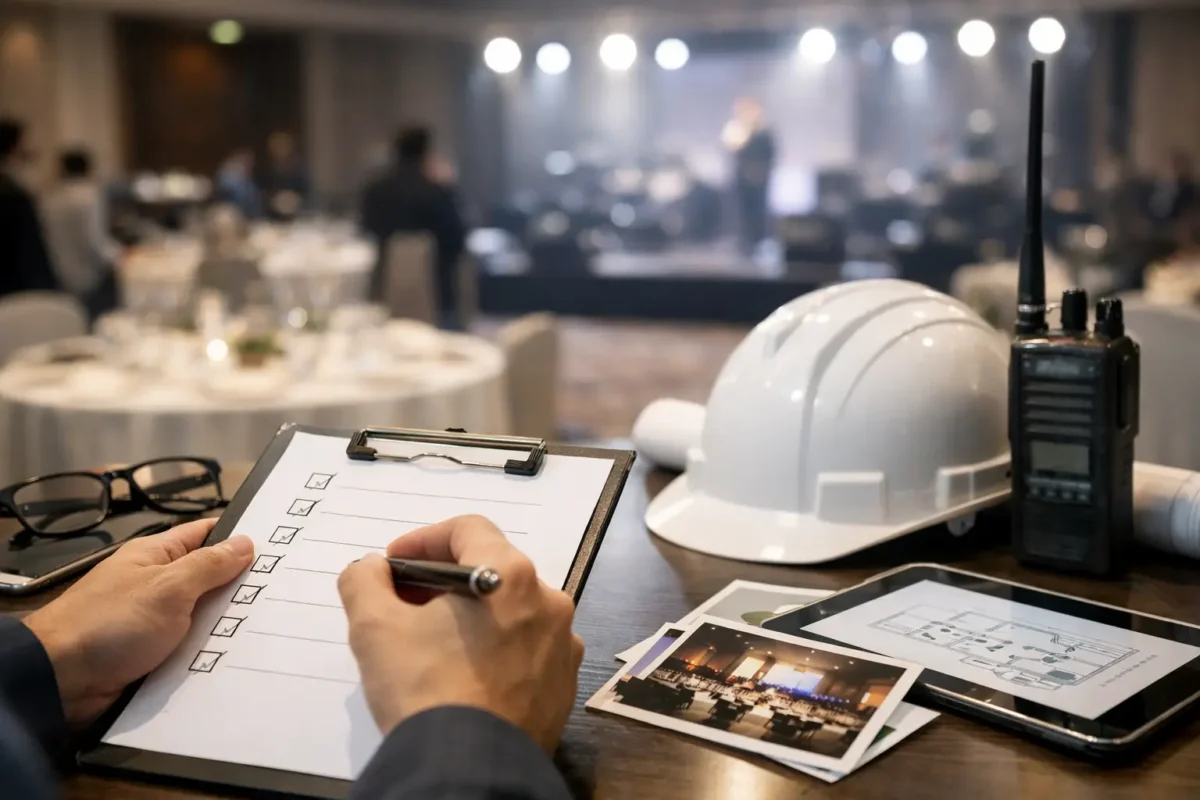
A senior speaker misses a connection, a delegate requires urgent medical support, or an exhibition delivery arrives after the venue’s loading window has closed. Each scenario can place pressure on a corporate event team quickly. An effective event risk management checklist gives everyone a clear route from potential disruption to confident action, protecting people first while preserving the experience and business purpose of the programme.
For conferences, sales meetings, incentive trips and exhibitions, risk management should not sit in a folder that is opened only when something goes wrong. It is a practical planning discipline that informs venue selection, supplier coordination, guest communications and on-site decision-making. The strongest plans are detailed enough to guide a team under pressure, but flexible enough to work across Singapore and different Asia-Pacific destinations.
Start with the event’s real priorities
Not every risk carries the same consequence. A delayed coffee break may be inconvenient; a failure in crowd movement, medical response or data handling may affect attendee welfare and organisational reputation. Before building the checklist, agree what must be protected and who will make decisions if plans change.
For most corporate programmes, those priorities include attendee health and safety, business continuity, senior stakeholder experience, brand standards, confidential information and regulatory compliance. A customer dinner for 40 guests will require a different level of control from a regional conference for 1,000 delegates, yet both need clear ownership and escalation routes.
It also helps to define the event’s non-negotiables early. These might be a keynote that must be delivered live, secure registration for invited customers, dietary requirements handled without error, or an exhibition opening that cannot move because of publicised timings. This context allows the team to focus effort where it matters most rather than treating every operational detail as equally critical.
Event risk management checklist: the planning essentials
A useful checklist records the risk, its likelihood, potential impact, preventive actions, contingency actions, owner and decision deadline. It should be reviewed with the client, venue and key suppliers, then updated as the programme develops. The following areas form a dependable starting point.
1. Venue, access and crowd movement
Confirm that the venue is appropriate for anticipated attendance, room layouts, staging, exhibition structures and emergency evacuation requirements. Review entry points, registration queues, lifts, stairs, accessible routes, loading areas and security arrangements. Where a programme includes simultaneous sessions or a popular product demonstration, consider how delegates will move between spaces without congestion.
The venue’s emergency procedures should be understood before event day, not during an alarm. Establish assembly points, identify the venue duty manager, and make sure the event team knows how announcements will be made. For larger events, a walk-through with key leads can reveal issues that are less visible on a floor plan.
2. Health, welfare and accessibility
Document first-aid arrangements, the nearest medical facilities, emergency contacts and the process for recording incidents. Consider heat and rain exposure for outdoor arrivals, food allergies, mobility needs, prayer spaces, nursing requirements and quiet areas where relevant to the audience.
Accessibility should be considered as part of the attendee journey, from invitation and registration through to transport, seating and participation. It is not simply a venue compliance question. For example, captions for virtual content, step-free access to the stage and clear dietary labelling can make a material difference to the experience and reduce avoidable last-minute issues.
3. Travel, accommodation and cross-border logistics
For regional meetings and incentive programmes, travel disruption deserves its own plan. Track flight timings, arrival windows, transfer schedules, passport and visa requirements where applicable, and alternative transport options. Keep a current list of travellers, hotel contacts and local ground partners, with appropriate controls for personal data.
A single delayed flight does not always require a full programme change. It may call for a revised transfer, a later joining point or an alternative host arrangement. The right response depends on the traveller’s role, the available time and whether the change affects other guests. Agree these thresholds in advance, particularly for executive attendees and speakers.
4. Suppliers, production and critical equipment
Identify which suppliers or items are essential to delivery: audiovisual production, internet connectivity, staging, catering, registration technology, transport, signage and exhibition contractors. Confirm arrival times, set-up dependencies, test windows and named contacts for each.
Build reasonable contingency into high-impact elements. A duplicate presentation file, spare microphones, backup internet access and additional power provision may feel cautious, but they are often proportionate safeguards for business-critical content. The objective is not to duplicate every resource. It is to understand where a single failure would stop the programme and plan accordingly.
5. Content, speakers and programme continuity
Senior speakers can be delayed, sessions can overrun and panel discussions can change at short notice. Prepare an approved running order that shows decision points, holding content and the person authorised to alter timings. Have presentation files checked in advance, including fonts, videos, embedded links and playback format.
A contingency plan for every session is unnecessary. It is wise, however, to have a credible alternative for keynote slots, award presentations, executive panels and other moments where an empty stage would be highly visible. This may be a moderated discussion, pre-approved video content or a change in programme order.
6. Security, privacy and reputation
Corporate events may involve confidential announcements, customer information, senior executives or high-value equipment. Review visitor management, badge controls, secure areas, photography permissions and the storage of registration data. Exhibition and conference teams should also be clear about how they will respond to unauthorised access, lost property, disruptive behaviour or media enquiries.
Communications should be accurate and calm. Nominate the individuals who can speak to attendees, venue representatives and the client leadership team during an incident. A rushed message from several different people can create confusion, even when the underlying issue is manageable.
7. Weather, public disruption and local conditions
Outdoor activations, off-site dinners and airport transfers are vulnerable to weather and local disruption. Monitor forecasts and local advisories in the days leading up to the event, especially during periods of heavy rain or when programmes involve ferry services, outdoor venues or extended road journeys.
The practical question is not merely whether rain is possible. It is whether the guest experience can continue safely and comfortably if it does. Covered walkways, ponchos, indoor alternatives, revised transport pick-up points and more realistic journey times can prevent a small weather issue becoming a major guest-facing problem.
Turn the checklist into a working event plan
A checklist is only valuable when the people involved know how to use it. Assign one owner to each action, set due dates, and distinguish between items that must be completed before contracting, before final confirmation, during set-up and on event day. Keep the live version accessible to the core delivery team, while protecting sensitive contact details and personal information.
A short risk review at key milestones is more effective than one lengthy meeting early in the process. Revisit the plan after the venue is confirmed, when the programme and attendee profile are clearer, after supplier briefings, and immediately before doors open. Changes in guest numbers, room layouts, travel plans or content can introduce new risks even when the original plan was sound.
On site, hold a concise team briefing that covers the programme flow, emergency procedures, escalation contacts, VIP arrangements and known watchpoints. Each person should understand both their own responsibility and who has authority to make a call. In a fast-moving situation, that clarity avoids delay and prevents well-meaning teams from working at cross purposes.
Balance preparation with proportion
Risk management should support a polished event experience, not make the programme feel over-controlled. The level of planning depends on the event format, guest profile, destination, venue complexity and business sensitivity. A closed-door leadership meeting may need heightened privacy controls, while a large public exhibition may require more detailed crowd, contractor and visitor-management planning.
The most useful approach is collaborative. Clients bring knowledge of their stakeholders, brand and internal decision-making; experienced event partners bring operational perspective and an understanding of what can change on the ground. At iCube Events, this close working relationship helps turn contingency planning into practical choices that suit the programme rather than generic precautions.
When the event is over, capture what worked, what changed and what should be improved next time. A delayed transfer, a registration bottleneck or an excellent venue response can all provide valuable insight. Treated as a living tool rather than a compliance exercise, a well-maintained checklist gives teams the confidence to focus on the people in the room and the conversations that brought them there.