
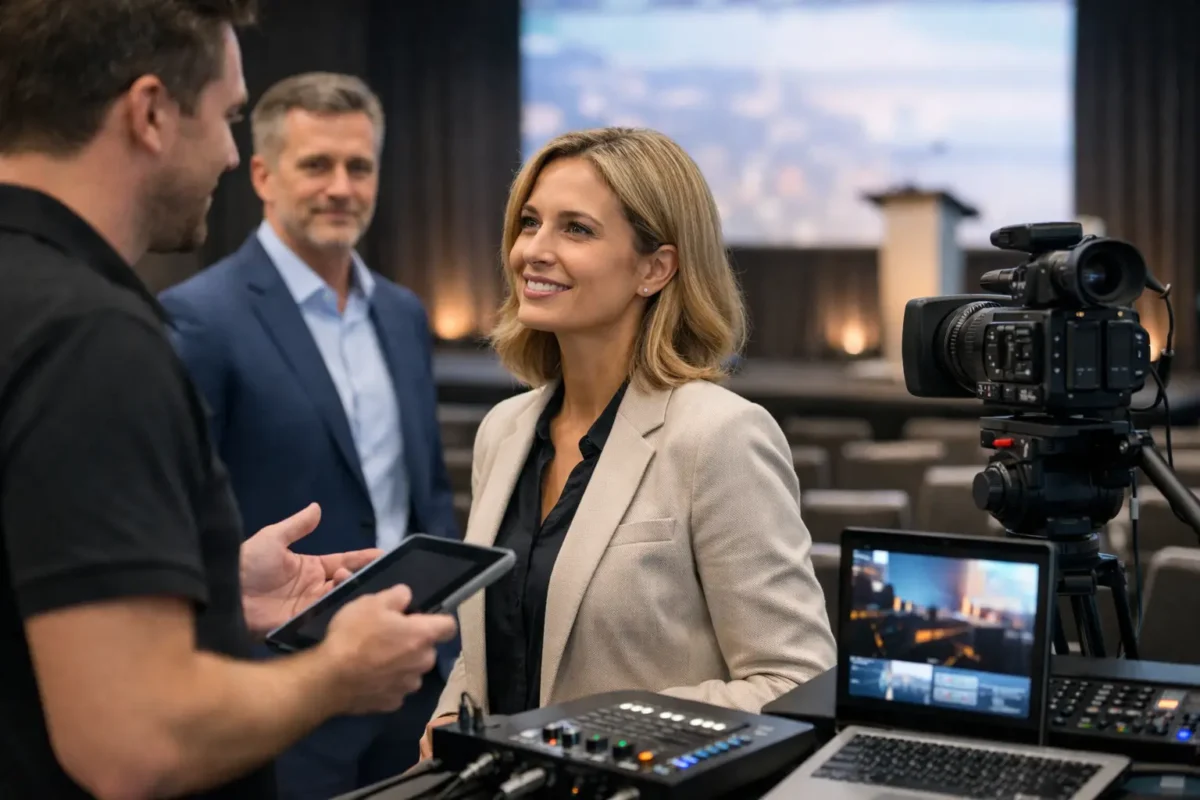
A conference can have a strong agenda, respected speakers and a carefully selected venue, yet still lose its audience in the first ten minutes if the sound is unclear or the presentation screen fails. Conference AV suppliers are not simply equipment providers. They are an essential part of how delegates receive your message, experience your brand and remain engaged throughout the programme.
For corporate events in Singapore and across Asia-Pacific, the right choice requires more than comparing equipment lists. It calls for a partner that understands the event’s business purpose, works confidently with the venue and production team, and stays attentive when plans change. The best technical solution is rarely the largest one. It is the one designed around the room, the audience and the moments that matter most.
Start with the conference experience you need to create
Before approaching suppliers, define what attendees must be able to see, hear and do. A leadership town hall, a life-sciences symposium and a regional sales conference may all use a main stage, microphones and screens, but their requirements will differ considerably.
For example, an executive session may depend on discreet, reliable support that keeps focus on senior speakers. A product launch might require more considered lighting, content playback and staging to build anticipation. A conference with remote panellists needs a clear plan for camera positions, audio routing, platform testing and backup communications.
This conversation should begin with outcomes rather than a list of technical items. Consider the scale of the audience, room configuration, session formats, speaker confidence, delegate interaction and the importance of recording or virtual participation. When objectives are clear, a supplier can recommend equipment and crew levels that are appropriate rather than excessive.
What conference AV suppliers need to understand
Capable conference AV suppliers ask detailed questions early. They will want to know the venue, access windows, ceiling height, sightlines, power availability, rigging restrictions and whether the event will move between rooms or cities. These details affect both feasibility and the attendee experience.
They should also understand your run sheet. A programme that includes keynote addresses, panel discussions, award presentations, video content and audience questions has changing technical needs across the day. Planning each transition in advance reduces awkward pauses and limits the risk of a speaker walking on stage before their content or microphone is ready.
For multi-day conferences, the supplier should look beyond the opening session. Breakout rooms, sponsor presentations, networking areas and evening functions may each need a different level of production support. Consistency matters, particularly when regional teams and senior stakeholders are moving between spaces. Delegates should not have to adjust to a noticeably poorer audio or visual experience in the rooms where important discussions continue.
Venue knowledge is valuable, but independent judgement matters too
Many venues have preferred technical partners. This can be useful because those teams know the loading arrangements, room layouts and house infrastructure. It does not automatically mean the proposed solution is the right fit for every event.
An experienced event team will assess whether the venue’s existing equipment meets the brief, where additional production is needed and how responsibilities are divided. Clarity is particularly important when a venue provides basic in-house AV while an external supplier manages show production, specialised lighting or virtual components. Without a defined scope, small gaps can become visible problems on event day.
Look for planning discipline, not just technical capability
Modern AV equipment is sophisticated, but conference delivery still relies on practical coordination. A dependable supplier builds time into the process for site inspections, production meetings, content checks, rehearsals and contingency planning. They do not wait until the doors open to confirm that a presentation works in the room.
Ask how they handle the details that often sit between teams. Who collects final speaker slides? What is the deadline for videos? How will last-minute edits be managed? When will presenters test their clickers and confidence monitors? Who confirms that walk-in music, holding slides and session timers are correct?
These are not minor production points. They determine whether the programme feels composed and professional to an audience. A supplier may have excellent equipment, but a poorly managed content process can still result in mismatched slide ratios, missing fonts, unsupported video files or delays between sessions.
A clear show flow is especially valuable where multiple stakeholders are contributing content. Regional conferences can involve speakers arriving from different markets, marketing teams managing brand assets and executives making late changes to presentations. The right support structure gives the event owner visibility without requiring them to personally solve every technical question.
Assess the people who will be on site
The most reassuring proposal is backed by the right people in the room. Ask who will lead on site, which technicians will support each space and how the team will communicate during live sessions. Technical roles may include an audio operator, video operator, lighting technician, stage manager and show caller, depending on the programme’s complexity.
It is sensible to match crew levels to risk, not just room size. A small executive meeting with a live broadcast to overseas offices may need more specialised attention than a larger in-person conference with straightforward presentations. Equally, an event with a demanding agenda should not rely on one person to operate sound, switch content and troubleshoot speaker requests simultaneously.
Professionalism is also visible in how technicians work around delegates and presenters. They should be calm, present when needed and unobtrusive when not. Senior speakers in particular appreciate clear briefings, discreet microphone fitting and someone nearby who can help without creating distraction.
Build resilience into the specification
No live event is entirely free from change. Speakers are delayed, videos are updated, internet connections fluctuate and session timings move. The question is not whether every issue can be prevented. It is whether the technical plan gives the team sensible options when an issue occurs.
Resilience may include duplicate presentation files, spare microphones, backup playback devices, additional adapters and tested internet alternatives where virtual participation is involved. The appropriate level of backup depends on the format and consequences of failure. A simple internal workshop does not need the same approach as a flagship conference attended by customers, partners and regional leadership.
Do not overlook audio. Delegates are often more forgiving of a modest screen than poor sound. Speech must be intelligible at the back of the room, panellists should hear one another naturally and playback audio needs to be checked at event volume, not only through a laptop. If interpretation, remote speakers or audience microphones are part of the plan, audio design becomes even more central.
Treat content as part of the production plan
Slides, films, motion graphics and speaker walk-on cues are often created separately from the AV plan. Bringing them together early prevents unnecessary compromises. A wide presentation canvas may look impressive, for instance, but only if speakers’ slides are designed for it and key information remains readable from every seat.
Agree practical content standards in advance, including aspect ratio, file formats, naming conventions and deadlines. Establish who has authority to approve final versions. This protects the production team from receiving several conflicting files and helps event owners keep control of brand accuracy.
If presentations include sensitive data, product roadmaps or patient information, content handling should be discussed with appropriate care. Access, storage and screen visibility may need to be managed differently for a closed corporate session than for a public-facing conference.
Choose a partner that collaborates across the whole event
AV is closely connected to registration timing, stage design, speaker management, catering turns and venue access. It works best when the technical team is included in wider event planning rather than asked to solve problems in isolation.
This is where an event management partner can add real value: translating business priorities into a coordinated production brief, aligning supplier schedules and keeping decisions moving across venue, content and programme teams. At iCube Events, this collaborative approach helps clients maintain high standards while making practical choices around timelines, formats and resources.
When reviewing proposals, look for evidence that the supplier has listened. The recommendation should explain why each element is included, identify assumptions and make clear where choices can be adjusted. A thoughtful partner will flag trade-offs honestly, whether that is balancing production ambition against room constraints or advising when a simpler format will serve the audience better.
The right AV relationship gives your speakers confidence and your delegates permission to focus on the ideas in front of them. That is the standard worth planning for: technology that supports the message so effectively that the audience remembers the conference, not the equipment behind it.