
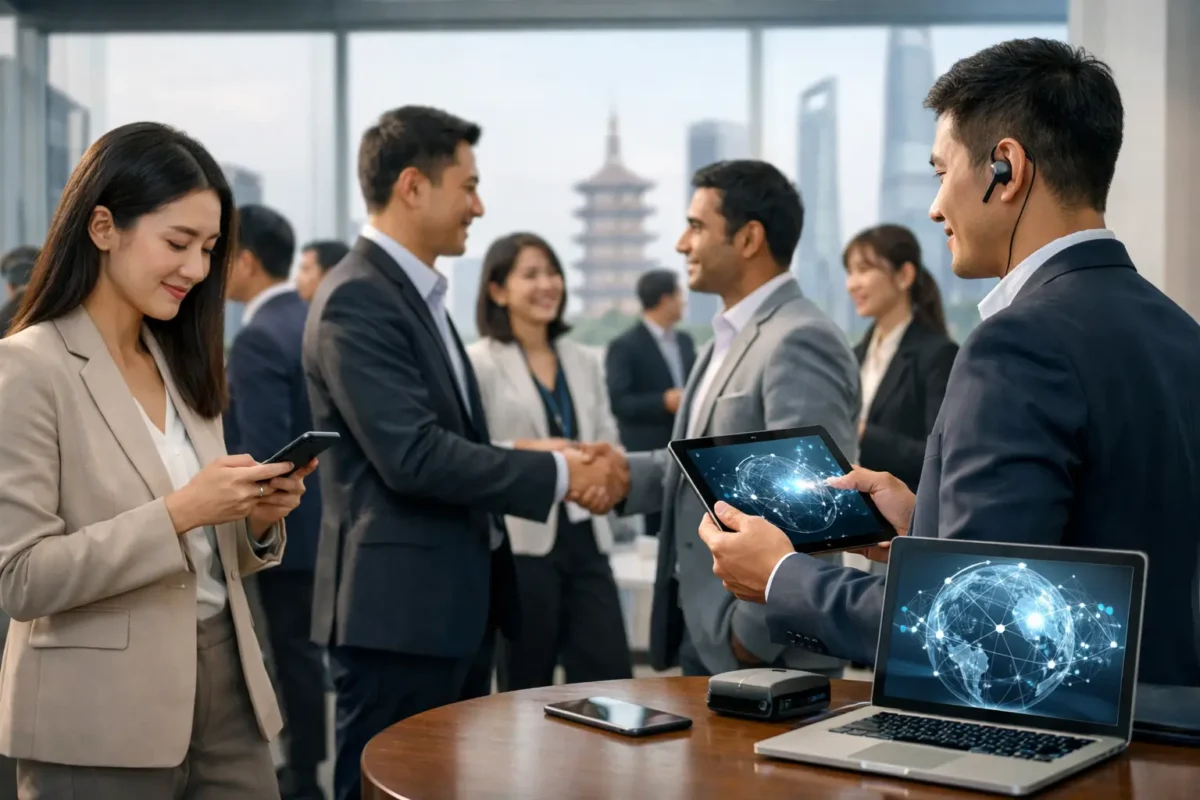
A regional conference can have an excellent speaker line-up, a polished venue and hundreds of relevant delegates, yet still leave people saying they did not meet the right contacts. The best conference networking technologies address that gap. They turn a crowded programme into a series of purposeful interactions, without making the attendee experience feel mechanical or demanding.
For corporate events in Singapore and across Asia-Pacific, the right choice depends less on fashionable features than on the business purpose. A sales meeting may need protected one-to-one appointments with priority accounts. A life-sciences conference may require careful profile permissions and moderated exchanges. An exhibition may need exhibitors to capture and act on qualified conversations quickly. Technology should support those outcomes, while the event team remains attentive to the people using it.
Start with the networking outcome, not the platform
Before selecting any technology, define what a valuable connection looks like for each attendee group. For delegates, it might mean meeting peers facing similar market challenges. For sponsors and exhibitors, it may mean conversations with decision-makers who have expressed a relevant need. For an internal leadership conference, it could be cross-market collaboration between colleagues who rarely work together.
This decision shapes everything else: which profile data to collect, whether appointments should be suggested or requested, how much access each group receives, and what success reporting is needed afterwards. A tool that is excellent for a large trade exhibition may be unnecessary for a focused customer dinner of 50 guests. Conversely, a simple contact-sharing function can be insufficient for a multi-day conference with 1,000 participants and a full exhibition floor.
The most useful technology also respects the pace of the event. Delegates should not have to spend their arrival completing lengthy profiles, learning an unfamiliar interface or checking several different channels. Good planning makes participation clear before the event, intuitive on site and worthwhile after the final session.
Best conference networking technologies to consider
Event apps with intelligent attendee profiles
A conference app remains one of the strongest foundations for networking when it brings the agenda, attendee directory, messaging and practical event information together. Profiles should be concise but meaningful, covering role, organisation, market, interests and the types of conversations a person welcomes. Optional profile fields are often more effective than excessive mandatory questions, particularly for senior delegates.
The app should help people identify relevant contacts without exposing more information than necessary. Search filters by industry, country, functional role or topic can be particularly valuable at regional APAC events, where attendees may be looking for partners in a specific market. Built-in messaging is useful, but only when notifications are managed carefully and response expectations are clear.
Matchmaking and meeting-scheduling tools
Matchmaking technology is most valuable where the event has a defined commercial or knowledge-sharing purpose. It can recommend contacts using profile data, stated interests and session choices, then let attendees request a meeting at available times. For hosted-buyer programmes, partner forums and executive roundtables, this structure can create far more meaningful conversations than an open directory alone.
There is a trade-off. Recommendations are only as useful as the information supplied, and overly eager matching can produce irrelevant requests. Provide thoughtful categories, allow users to adjust their preferences and retain an approval step for meeting requests. It is also wise to reserve inviting meeting areas and build realistic appointment windows into the agenda. A calendar is not a networking strategy if every available slot conflicts with a keynote or meal service.
Smart badges, QR codes and digital contact exchange
Smart badges using QR, NFC or RFID technology can make contact exchange quick and natural. A delegate can scan a code, tap badges or collect details through an event app instead of searching for a business card. This is particularly helpful in exhibition environments and receptions, where conversations are brief and hands may be occupied.
The method should match the audience. QR codes are familiar and accessible because attendees can use their own phones. NFC-enabled badges offer a more refined interaction for high-volume events, but require reliable on-site testing, clear instructions and a support plan for lost or damaged badges. In either case, make the consent model explicit. Attendees should know what is shared, with whom and how they can manage their details.
Exhibitor lead-capture systems
For conferences with an exhibition component, lead capture gives exhibitors a practical reason to invest time in visitor conversations. Exhibitor teams can scan a badge or QR code, add conversation notes, classify interest and record agreed follow-up actions while the discussion is still fresh.
The strongest set-up does more than count scans. It guides exhibitors to capture context, such as the solution discussed, timeframe, market and next step. Event organisers can then provide useful aggregate insight while exhibitors retain the details required for responsible follow-up. Training matters here: a scanning device should never become a barrier between the exhibitor and the person standing in front of them.
Interactive session technology
Polls, moderated questions, live discussion boards and small-group prompts can create a reason for strangers to speak to one another. Used well, they turn a passive session into a shared reference point for conversations over coffee or in a breakout room. For example, a poll on regional market priorities can reveal where attendees have common concerns, giving moderators a useful way to connect people afterwards.
This technology requires restraint. Too many prompts distract from speakers and can make a leadership audience feel managed rather than engaged. It works best when the session design has a genuine use for participation and facilitators are prepared to respond to what delegates contribute.
Virtual and hybrid connection spaces
When a programme includes remote speakers, distributed teams or delegates unable to travel, a virtual networking layer can extend access to selected sessions, digital meeting slots and resource sharing. It is especially helpful for regional organisations balancing travel constraints across several markets.
However, remote networking should not be treated as a replica of the in-person experience. Short, moderated online discussions and pre-arranged virtual meetings tend to perform better than an always-open virtual lounge. The objective is to give remote attendees a clear route into relevant conversations, rather than adding another channel that no one has time to monitor.
Build technology into the attendee journey
The technology choice is only one part of the work. Attendee adoption begins before arrival. Pre-event communications should explain why profiles and meeting preferences matter, when to complete them and what participants will gain. For senior or time-poor guests, a concierge-style support process can make the difference between an incomplete profile and a valuable first meeting.
On site, visible help points and well-briefed staff are essential. Delegates need quick assistance with app access, badge exchange and meeting locations, particularly during the first hour of the conference. The team should also watch for practical friction: poor venue connectivity, last-minute agenda changes, crowded networking zones and sessions that run over time can quickly undermine even well-configured tools.
After the event, technology should support measured follow-up. Meeting numbers are useful, but they are not the whole story. Review attendance at scheduled appointments, messages exchanged, leads qualified, session participation and post-event feedback. Where appropriate, invite attendees to continue selected conversations or access resources, while honouring the permissions they provided.
Questions to ask before making a selection
A considered review usually comes down to five questions:
- Does the technology serve a specific attendee and business outcome?
- Can it work reliably with the venue connectivity, registration process and event timetable?
- Is the experience straightforward for the least technical member of the audience?
- Does the data collection and consent approach meet organisational and local privacy requirements?
- Can the event team support it properly from set-up through to post-event reporting?
The final question is often underestimated. A feature-rich platform without profile moderation, meeting-zone management, exhibitor briefings and on-site support can create more work for attendees than value. The right solution may be a full event app with matchmaking for one conference, then a carefully designed QR contact exchange and hosted introductions for the next.
At iCube Events, we see technology deliver its best results when it is planned around human behaviour: who needs to meet, what will make that conversation worthwhile and how the event environment can make it easy. Choose the tools that give delegates a genuine reason to engage, then give them the guidance, space and time to make those connections count.