
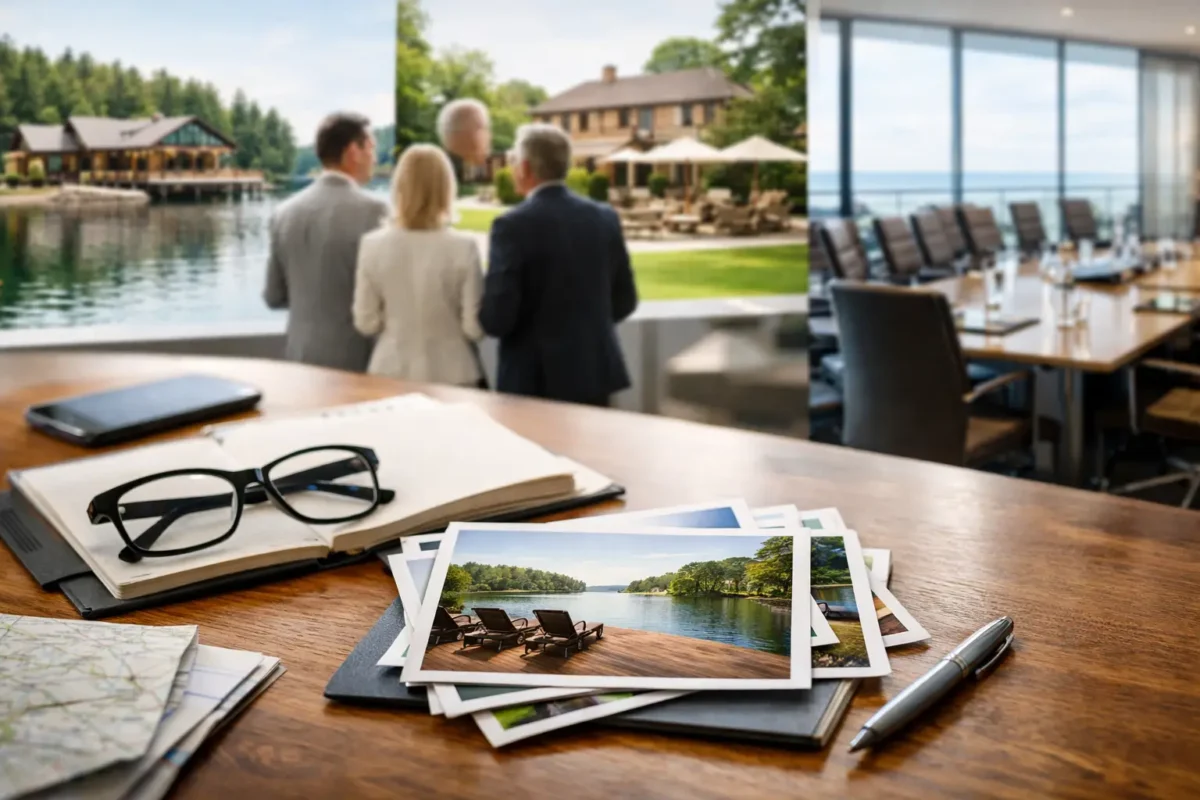
An executive team can spend a full day in a beautiful room and still leave without a single decision. The difference is rarely the view alone. The best top executive offsite venues create the right conditions for candour, concentration and purposeful conversation, while giving organisers confidence that every practical detail is under control.
For leadership teams in Singapore and across Asia-Pacific, an offsite is often called when the stakes are high: a regional strategy needs alignment, a leadership transition requires trust, or a commercial plan needs honest challenge before it goes to market. Venue selection should therefore begin with the outcome required, not with a shortlist of attractive properties.
What makes top executive offsite venues work
An executive offsite has a different rhythm from a conference. Delegates need privacy without feeling closed in, enough structure to make progress, and informal moments where difficult issues can be explored away from the agenda. A venue must support all three.
Location matters first. A property that takes 90 minutes to reach may appear suitably removed from daily distractions, but it can also reduce productive time and place unnecessary pressure on senior attendees with tight schedules. For a one-day programme, a discreet city hotel, private club-style space or resort within easy reach of Singapore may be the more practical choice. For a two- or three-day session, a destination venue can justify the additional travel if the programme genuinely benefits from deeper immersion.
The meeting environment deserves equal attention. Executive teams tend to work best in rooms with natural daylight, comfortable seating, strong acoustics and enough wall space for working materials. A boardroom layout may suit a small decision-making group, while a flexible room with breakout areas can be more effective for a larger leadership cohort. The room should feel composed rather than overly formal. People are more likely to contribute openly when the setting is professional but not intimidating.
Privacy is not merely a preference. Discussions may involve commercial performance, people matters, future investments or confidential customer plans. Ask whether the meeting room is isolated from larger events, how access is managed, and whether the venue can provide private dining or dedicated areas for breaks. A venue that hosts several major functions at once can still be suitable, but only if delegate movement and confidentiality have been carefully planned.
Start with the business purpose, not the venue type
The strongest venue choice follows a clear brief. Before comparing options, agree what the leadership team must achieve by the end of the offsite. This may be a set of agreed priorities, a decision on a regional operating model, stronger relationships between newly combined teams, or a practical 90-day plan.
That objective shapes the format. A strategy session requiring focused debate may need one main room, discreet service and long, uninterrupted working blocks. A leadership gathering designed to improve relationships may benefit from a residential venue with shared meals and well-considered activities. A regional sales leadership meeting may require formal presentations, breakouts and technology for colleagues joining remotely.
There is a trade-off in every choice. A central business hotel can be highly efficient and easy for international arrivals, but it may not create enough distance from routine pressures. A resort environment can encourage reflection and connection, but travel, weather and reduced accessibility can affect attendance or energy levels. The right answer depends on the programme, participant profile and time available.
Evaluate the experience beyond the meeting room
Senior attendees notice small points of friction because their time is limited. Arrival should be straightforward, registration should be discreet, and the first ten minutes in the venue should communicate that the day has been properly considered. This is where hospitality management and detailed on-site coordination matter.
Consider the full participant journey. Is there a quiet arrival area before the session begins? Can coffee and refreshments be positioned close to the meeting space without interrupting discussions? Is lunch private enough to allow conversations to continue naturally? Are there suitable spaces for one-to-one conversations, short walks or informal debriefs?
Food and beverage arrangements should support the agenda rather than compete with it. A heavy working lunch may slow the afternoon session, while an overly rushed meal can remove the chance for relationship-building. Dietary requirements should be handled quietly and accurately. For a senior group, attentive service often has more value than elaborate presentation.
Accommodation becomes especially important for multi-day offsites. Delegates should not have to navigate long distances between rooms, meeting areas and dinner venues. Consistent room quality, reliable Wi-Fi, early check-in where possible and a clear point of contact can protect the experience before the formal programme even starts.
Technology must be dependable, not distracting
Even a small executive session may involve a video address from a global leader, confidential presentations, collaborative displays or a hybrid attendee joining from another market. Venue technology should be tested against the actual agenda, not assessed only by a standard capabilities sheet.
Check internet reliability in the meeting and breakout spaces, screen visibility in daylight, audio quality, microphone requirements and the availability of on-site technical support. If sensitive information will be shown, confirm how devices, printed materials and access to the room will be managed. A simple, well-rehearsed set-up is usually better than introducing technology for its own sake.
Look for flexibility when plans change
Executive schedules are prone to late adjustments. A speaker may need to join virtually, a confidential discussion may run over, or a flight delay may affect the start time. The venue team and event partner need to respond calmly without making the group feel the disruption.
During site inspections, ask practical questions. Can the room layout be adjusted quickly? Is an alternative indoor space available if an outdoor reception is affected by rain? Can meal timings move if the agenda changes? Who will make decisions on site, and how quickly can they act?
These questions reveal more than the venue brochure. They show whether the operation has the judgement and service culture needed for senior stakeholders. A polished space with rigid processes can be less effective than a simpler property supported by an experienced, responsive team.
Consider destination offsites with regional realities in mind
For Asia-Pacific leadership teams, destination selection requires a wider operational view. Direct flight availability, passport and visa requirements, airport transfer times, local weather patterns, accessibility needs and emergency contingencies can all affect the programme. A destination that is appealing for one market may be inconvenient for another.
Singapore is well placed for efficient executive gatherings, particularly when speed, accessibility and high service standards are the priority. Nearby destinations in Malaysia, Thailand, Indonesia, Vietnam, Hong Kong, Macau, Korea, Japan and the Philippines can offer a stronger sense of separation from day-to-day work. However, the added value should be clear. If the offsite is only 24 hours, excessive travel can undermine the purpose.
Cross-border programmes also need consistent communication. Delegates should know precisely what to expect, from transfer arrangements and dress code to weather considerations and local customs. Behind the scenes, organisers should have clear run sheets, supplier contacts, contingency plans and a shared understanding of who is responsible for each decision.
Make the site inspection count
Photographs cannot tell you whether a room feels private, whether sound carries from the corridor, or whether the lunch service can operate without disrupting a sensitive conversation. A site inspection remains one of the most useful stages in selecting a venue, particularly for high-profile leadership programmes.
Walk the journey as a delegate would. Time the route from drop-off to meeting room. Stand at the back of the room while someone speaks. Inspect the breakout spaces at the time they will be used. Review where branding, registration materials and personal belongings will sit. If the programme includes a dinner, assess the lighting, noise level and service flow rather than judging the room only while it is empty.
A good event partner will also test the venue against the working agenda and identify alternatives before they become problems. iCube Events approaches this planning stage as a shared decision-making process, balancing the desired experience with practical delivery, timeline and programme requirements.
Choose a setting that gives leaders room to think
The best executive offsite venue is not necessarily the most exclusive or the furthest from the office. It is the setting that makes it easier for the right people to have the right conversations, reach clear decisions and leave with shared ownership of what happens next.
When the venue, agenda and on-site experience are planned as one, the offsite feels considered rather than staged. That gives leaders something more valuable than a change of scenery: protected time to think clearly, listen carefully and move the business forward together.